Today's Biggest Tech News: Samsung's New Foldables, AI Security and More
Tech News • AnantaGo • 👁️ 0 views
# Today's Biggest Tech News: Samsung's New Foldables, AI and the Gadgets Shaping 2026
Technology is moving quickly, and 2026 is becoming an exciting year for smartphones, artificial intelligence, wearable devices, and connected gadgets.
New products are arriving, AI is becoming more deeply integrated into everyday technology, and devices that once seemed experimental are becoming more practical for regular users.
Today, several technology developments are worth watching, from the continued evolution of foldable smartphones to the rapid growth of AI assistants, smartwatches, smart glasses, and AI security.
Instead of simply listing headlines, this article looks at what these developments mean for everyday users and whether they are actually worth paying attention to.
## Samsung's Foldable Phones Continue to Push Smartphone Design Forward
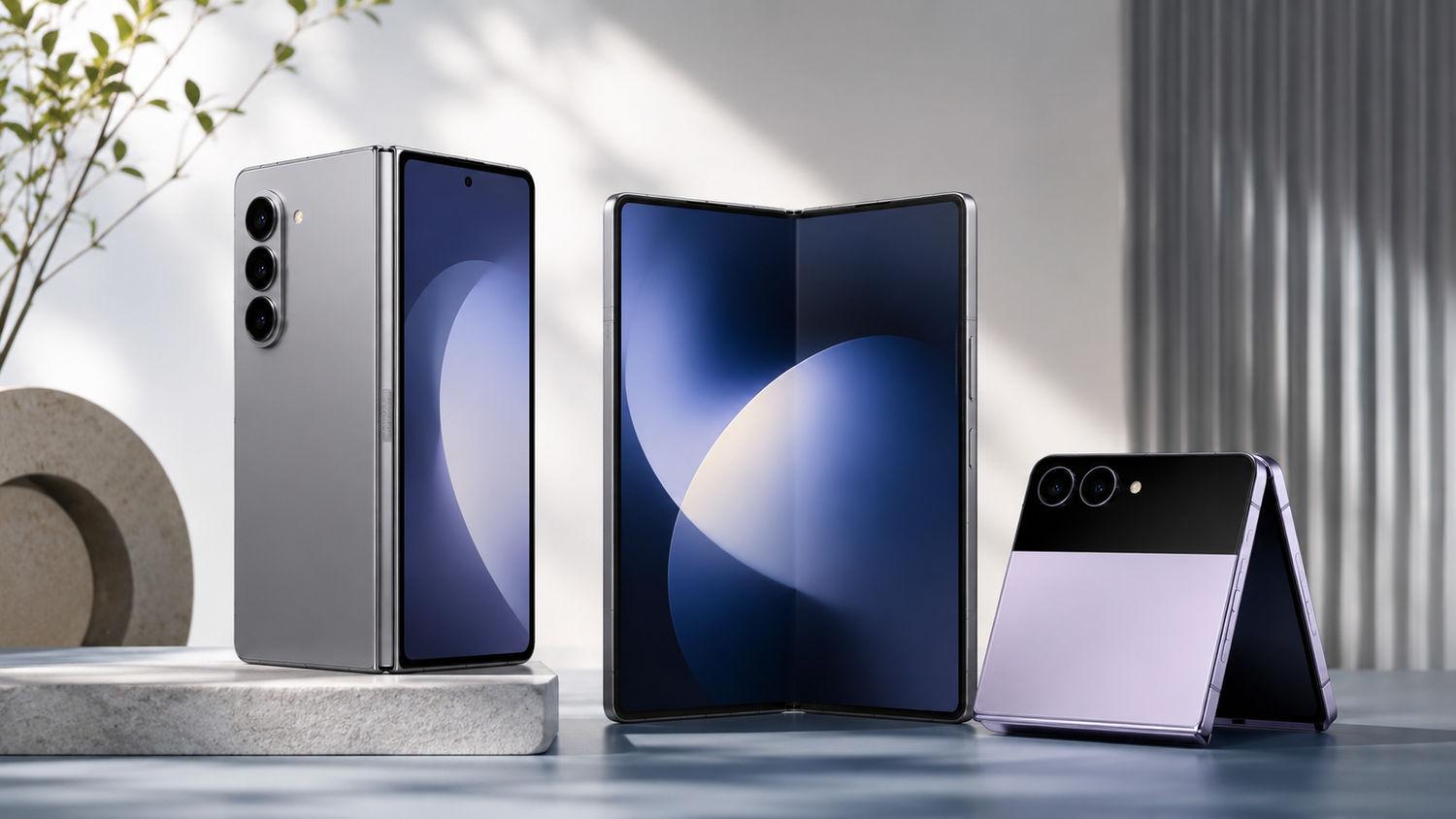
Foldable smartphones have gradually moved from an experimental category into a serious part of the premium smartphone market.
Samsung is one of the companies that has invested heavily in this form factor, and its latest foldable generation continues to focus on making large-screen smartphones more practical.
The basic idea behind a foldable phone is simple.
You can carry a relatively compact device while opening it to reveal a much larger display when you need more screen space.
That larger display can be useful for:
* Watching videos
* Reading documents
* Browsing websites
* Multitasking
* Editing photos
* Playing games
* Using multiple applications
For people who regularly multitask, the additional screen real estate can be more useful than simply having a slightly faster conventional smartphone.
However, foldables still come with compromises.
They can be more expensive than traditional flagship phones, and buyers should consider factors such as thickness, weight, durability, battery life, hinge design, and repair costs.
That means a foldable smartphone isn't automatically the right choice for everyone.
If you primarily use your phone for messaging, social media, photography, browsing, and video calls, a conventional flagship may still provide better value.
For users who want a larger screen without carrying a separate tablet, however, foldables remain an interesting option.
## AI Is Moving Beyond Basic Chatbots
Artificial intelligence has been one of the biggest technology stories of recent years.
Initially, much of the consumer AI conversation revolved around chatbots that could answer questions, summarize information, generate text, brainstorm ideas, or help with basic tasks.
The next stage is increasingly focused on **AI that can help complete tasks**.
This is where AI agents become interesting.
Instead of simply answering a question, a more advanced AI system could understand an objective, break it into smaller steps, and interact with different tools or services to help achieve that objective.
Imagine telling an assistant:
**"Help me organize my weekend trip."**
A more capable AI system could potentially help research destinations, compare options, organize information, create an itinerary, and prepare a useful plan.
The technology is still developing, and users should verify important information themselves.
However, this direction could significantly change how people interact with computers.
Rather than opening several applications and manually moving information between them, users could increasingly communicate what they want in natural language.
## Smartphones Could Become More AI-Centered
Today's smartphones are largely organized around applications.
If you want to edit a photograph, you open a photo-editing application.
If you want directions, you open a navigation application.
If you want to book something, you open the appropriate service.
AI could eventually make these interactions feel less fragmented.
Instead of thinking about which application you need, you could simply explain what you want to accomplish.
That doesn't necessarily mean traditional applications will disappear.
Instead, AI could become an intelligent layer that works across different services and applications.
For consumers, the biggest advantage could be convenience.
However, there is an important trade-off.
The more control an AI system has over your applications, accounts, files, and personal information, the more important privacy and security become.
Users should understand what permissions an AI service has before allowing it to perform actions automatically.
## AI Security Is Becoming Increasingly Important
The growth of artificial intelligence creates another major issue: security.
As AI systems become more capable, they may receive access to increasingly sensitive information and powerful digital tools.
That creates important questions.
What happens if an AI system misunderstands an instruction?
What if an AI agent accesses information it shouldn't?
What happens if someone attempts to manipulate an AI-powered system?
These concerns are becoming increasingly relevant as businesses and consumers integrate AI into everyday workflows.
AI security isn't only about protecting an AI model.
It also involves protecting the information, applications, accounts, infrastructure, and services connected to that AI system.
For everyday users, basic digital security remains extremely important.
Strong passwords, two-factor authentication, software updates, careful permissions, and awareness of suspicious links are still essential even as AI becomes more advanced.
## Smartwatches Are Becoming More Capable
Smartwatches have evolved significantly from the early days when their main purpose was displaying notifications.
Modern smartwatches can provide features such as:
* Fitness tracking
* Activity monitoring
* Navigation
* Music controls
* Calls and messages
* Notifications
* Mobile payments
* Voice assistance
* Smartphone integration
The bigger trend is that smartwatches are increasingly becoming part of broader technology ecosystems.
A smartwatch can work together with a smartphone, wireless earbuds, laptop, tablet, and other connected devices.
This can make everyday technology feel more seamless.
For example, you might begin listening to something on your phone, control it from your watch, and continue using another connected device without manually configuring everything again.
However, buyers should consider compatibility.
A smartwatch that works extremely well with one smartphone ecosystem may not provide the same experience with another.
Before buying, always check which phones and operating systems the watch supports.
## AI Smart Glasses Could Become More Interesting
AI-powered smart glasses are another category worth watching.
The concept combines several technologies into wearable eyewear, including:
* Cameras
* Microphones
* Speakers
* Wireless connectivity
* Voice assistants
* AI services
Instead of pulling a smartphone out of your pocket, users could potentially ask questions, take photographs, listen to information, or interact with an AI assistant while keeping their hands free.
This could be particularly useful for:
* Travelers
* Content creators
* Outdoor activities
* Hands-free communication
* Navigation
* Language translation
The technology is still evolving, though.
Battery life, comfort, connectivity, AI capabilities, and camera quality all matter.
Privacy is another major consideration.
A camera attached to someone's face is different from a camera that remains inside a smartphone. People nearby may not always know when they are being recorded.
As smart glasses become more common, responsible use and clear recording indicators will become increasingly important.
## Why Today's Technology Trends Matter
At first glance, foldable phones, AI agents, smartwatches, and smart glasses may appear to be unrelated.
But there is a common trend connecting them.
Technology is becoming increasingly:
**Personal. Connected. Intelligent.**
Smartphones are becoming AI assistants.
Smartwatches are becoming extensions of smartphones.
Smart glasses are exploring hands-free computing.
AI systems are becoming capable of helping users complete increasingly complex tasks.
The goal is no longer simply to make devices faster.
Technology companies are increasingly trying to make devices easier and more natural to interact with.
## Should You Upgrade Your Gadgets Right Now?
Seeing new technology in the headlines doesn't mean you need to immediately replace everything you own.
Before purchasing a new device, ask yourself three simple questions.
### Does It Solve a Real Problem?
If your current device already works well, upgrading may not provide enough value.
A new gadget should make something easier, faster, more convenient, or more enjoyable.
### Will You Actually Use the Features?
A long list of specifications doesn't matter if you never use them.
For example, someone who primarily sends messages, browses the web, and watches videos may not need the most expensive smartphone available.
Similarly, buying a smart device with dozens of advanced features doesn't make sense if you only need basic functionality.
### Does It Work With Your Existing Devices?
Compatibility is becoming increasingly important.
If you already own several devices from the same ecosystem, choosing compatible products can provide a smoother experience.
Before buying, check smartphone compatibility, operating-system requirements, required applications, and supported features.
## What Consumers Should Watch Next
The next stage of consumer technology will likely involve even deeper integration between AI and everyday devices.
AI is increasingly appearing in:
* Smartphones
* Laptops
* Smart glasses
* Smartwatches
* Home appliances
* Cars
* Cameras
* Productivity software
The interesting question isn't whether AI will appear in these products.
It is how useful those features will actually become.
The best technology won't necessarily be the device with the largest number of AI features.
It will be the product that uses AI to solve real problems without making everyday life more complicated.
## Frequently Asked Questions
### What is the biggest technology trend right now?
Artificial intelligence remains one of the biggest technology trends, with AI increasingly being integrated into smartphones, computers, wearables, software, and other consumer products.
### Are foldable smartphones worth buying?
Foldable smartphones can be worth considering if you want a larger display in a more compact design or frequently multitask. However, they can cost more than conventional smartphones, so buyers should compare the benefits with their actual needs.
### Will AI replace smartphone apps?
AI is unlikely to make traditional apps disappear immediately. Instead, AI assistants and agents may increasingly work across multiple applications, allowing users to complete tasks using natural-language instructions.
### Are AI smart glasses useful?
AI smart glasses can be useful for hands-free photography, audio, voice assistance, translation, and other tasks. Their usefulness depends on the available features, battery life, connectivity, comfort, and the user's daily routine.
### Why is AI security becoming important?
As AI systems become connected to more data and software, protecting them from misuse, unauthorized access, manipulation, and other security risks becomes increasingly important.
### Should I upgrade my smartphone because of AI features?
Not necessarily. If your current phone performs well, an upgrade may not be necessary. Consider upgrading when a new device provides features that solve a problem you actually have.
### Are smartwatches replacing smartphones?
Smartwatches aren't replacing smartphones. Instead, they work as companion devices that provide quick access to notifications, fitness information, calls, payments, navigation, and other functions.
### What should I consider before buying new technology?
Consider your actual needs, compatibility with your existing devices, software support, privacy, security, battery life, durability, and overall value rather than choosing a product simply because it is new.
## Quick Technology Buying Checklist
Before purchasing a new gadget based on today's technology trends, ask:
* ✅ Does this gadget solve a real problem?
* ✅ Will I use its main features regularly?
* ✅ Is it compatible with my existing devices?
* ✅ How long will the manufacturer provide software updates?
* ✅ Does it have good privacy and security controls?
* ✅ Is the battery life suitable for my routine?
* ✅ Is it comfortable and practical for everyday use?
* ✅ Are replacement or repair costs reasonable?
* ✅ Is the price justified by the features?
* ✅ Am I buying it because I need it or simply because it is trending?
## Final Takeaway
Technology is developing rapidly, but the newest product isn't automatically the best product.
The biggest developments happening today—from AI and foldable smartphones to smartwatches and smart glasses—show that technology is moving toward devices that are more connected, intelligent, and capable of understanding what users want.
For consumers, the smartest approach is to stay informed without feeling pressured to upgrade constantly.
Follow the trends, understand what has genuinely changed, compare your options, and then decide whether a new product provides enough value for your everyday life.
Technology will continue changing quickly, and not every trend will become a lasting success.
But the move toward more intelligent, connected, and natural technology is clearly one of the defining developments of 2026.
**AnantaGo will continue bringing you technology news, practical buying guides, useful products, and easy-to-understand explanations of the gadgets shaping the future.**