AI Is Learning to Control Real Machines — Here's Why That Matters
AI is moving beyond chatbots. New AI systems are being designed to control real machines, including laboratory equipment and robotic devices. Here's what this means, how it works and why it could change the future of work.
For the past few years, most people have experienced artificial intelligence through a screen. You type a question into ChatGPT. You ask Gemini to summarize something.
You use an AI tool to create an image, write an email or help with code. But something important is changing. AI is increasingly being connected to tools that can do things outside a chat window. Instead of only producing an answer, an AI system can be given access to software, machines and other equipment. That means AI can potentially move from telling us what to do to actually helping perform the task.
A recent example came from Anthropic, which announced a new framework called the Model Hardware Standard. It is designed to let AI agents communicate with programmable physical devices, including laboratory equipment and robotic systems. That may sound like science fiction. It isn't. But it also doesn't mean robots are suddenly taking over everything.
Here's what is actually happening.
AI Is Moving Beyond the Screen
The simplest way to understand the change is to compare two types of AI. The first type gives you information. For example, you could ask an AI to explain how a chemical experiment works. It can read information, reason about it and give you an answer.
The second type can interact with tools. If that AI is connected to the right equipment and software, it could potentially help perform parts of the experiment itself. This is the basic idea behind AI agents. An AI agent is a system designed to work toward a goal by deciding what steps are needed and using available tools to complete those steps.
Until recently, most AI tools were mainly digital assistants. Now developers are working on ways to connect them to the physical world.
What Did Anthropic Actually Announce?
Anthropic recently introduced the Model Hardware Standard, or MHS. The idea is relatively simple.
Different machines normally communicate with computers in different ways. That can make it difficult for an AI system to work with physical equipment.
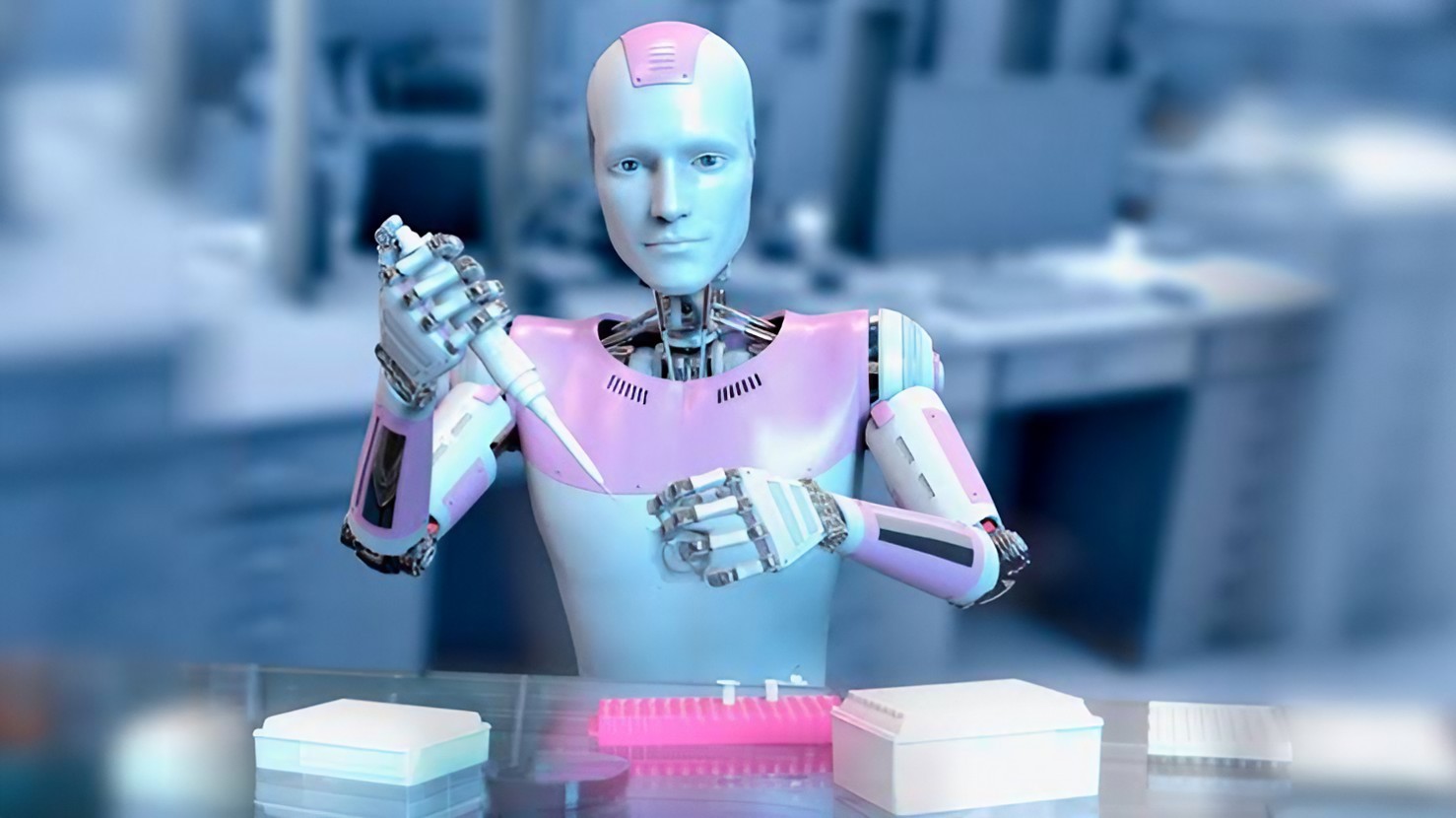
Anthropic's framework is designed to provide a common way for AI agents to communicate with programmable devices. The company says the system can work with equipment such as microscopes, lasers, robotic arms and liquid-handling machines.
This is particularly interesting for scientific research because laboratories contain many specialized machines. If AI systems can communicate with those machines safely, they could potentially help researchers perform parts of complicated experiments.
Anthropic says the early system is being shared with partners for safety testing, with plans to open-source it in the future.
How Can AI Control a Machine?
An AI model cannot simply look at a robotic arm and magically control it. There needs to be software connecting the AI system to the machine. Think about it like using a smartphone. You might tell your phone to play music. The voice assistant understands your request, but another application actually plays the music.
AI-controlled machines work on a similar principle. The AI understands the goal. Software translates that goal into instructions. The connected machine receives those instructions and performs an action. The system can then receive information about what happened and decide what to do next.
This creates a loop: Understand the goal → choose an action → use a tool → observe the result → decide what comes next. That is what makes agent-style AI different from a simple chatbot.
Why This Could Be a Big Deal for Science
Scientific research often involves repetitive work. Researchers may need to prepare samples, run tests, record measurements and repeat experiments many times. Some of these tasks require careful human judgment. Others can be highly repetitive.
If an AI system can safely control laboratory equipment, it could potentially handle some routine steps while researchers focus on the bigger questions. Imagine a researcher asking a system to test a set of materials under specific conditions. Instead of manually entering every instruction into different machines, an AI-assisted system could potentially coordinate parts of the process.
The researcher would still need to define the experiment, check the results and make important decisions.
The goal would not necessarily be to remove people from the laboratory. It could be to give researchers more time for the work that requires human expertise.
This Isn't Just About Robots
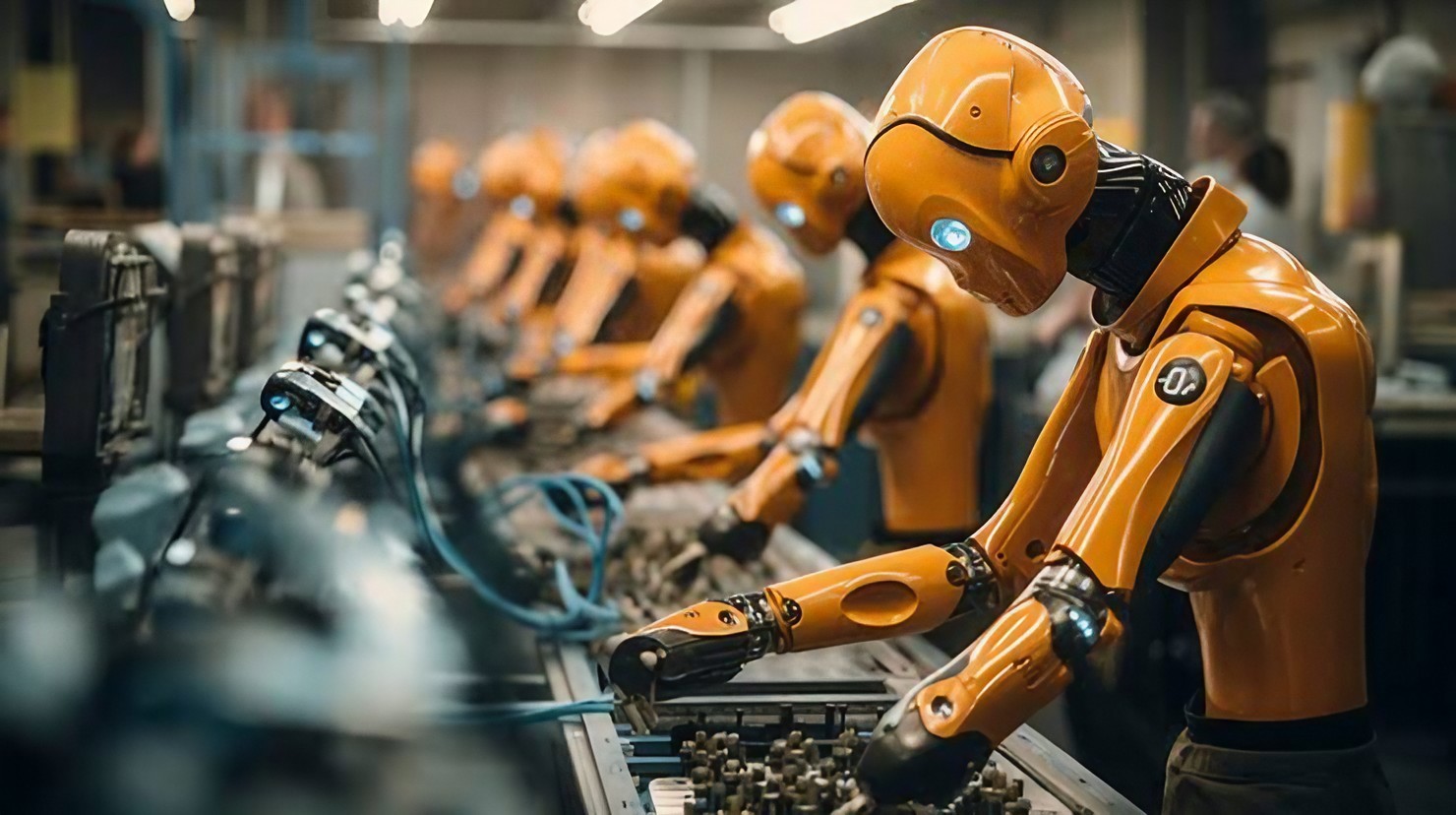
When people hear about AI controlling machines, they often imagine humanoid robots. But the technology could be much more practical than that. A machine does not need to look like a person. It could be a robotic arm in a factory. A microscope in a laboratory. A machine used to test materials. A device that moves objects from one location to another.
Or equipment used in advanced manufacturing. In many cases, specialized machines are already much better at their specific jobs than a human could be. AI can add another layer by helping decide when and how those machines should be used.
What Are the Risks?
Giving AI the ability to control physical equipment also creates serious safety questions. A chatbot giving you the wrong answer is frustrating. A system controlling a machine incorrectly can be dangerous. That means physical AI needs stronger safeguards.
Developers need to decide exactly what an AI system is allowed to control. There also needs to be a way for humans to stop an operation when something goes wrong. Testing becomes extremely important too. An AI system might work correctly during hundreds of tests and still make an unexpected decision in a new situation.
This is why early systems are being tested carefully before wider deployment. The more powerful the machine, the more important those safeguards become.
Could AI Eventually Run Entire Workflows?
That is one of the most interesting possibilities. Today, a person might have to coordinate several separate systems. Tomorrow, an AI agent could potentially coordinate some of them. For example, a research workflow might involve reading previous results, choosing the next test, operating equipment, recording measurements and preparing a report.
An AI system could potentially connect several of these steps. But there is an important difference between "can" and "should." Just because an AI system can perform an action does not mean it should be allowed to perform that action without human approval.
High-risk decisions will likely continue to require human supervision. The future is more likely to involve humans and AI working together than AI simply replacing every person involved.
AI understands the goal.
Software connects the AI to approved tools.
Machines perform specific physical actions.
Sensors or software provide information about the result.
The AI can decide what step should happen next.
Humans can supervise important or risky decisions.
What This Means for Everyday People
You probably won't wake up tomorrow to find an AI running every machine in your home. The technology is still developing. But the direction is important. For years, computers have mainly worked with information. Now AI is helping connect computers with the physical world. That could eventually affect medicine, manufacturing, scientific research, transportation and many other industries.
It could also create new jobs and new types of software while changing existing ones. For consumers, the biggest change may appear gradually through products that quietly use AI to perform tasks in the background. The technology may become less visible precisely because it becomes more useful.
The Bottom Line
AI is no longer limited to generating words, pictures and computer code. The next step is connecting AI systems to tools and machines that can act in the real world. Anthropic's new hardware framework is one example of this direction, showing how AI agents could potentially communicate with laboratory and industrial equipment.
The technology is still developing, and there are serious questions around safety, reliability and human control. But the basic idea is easy to understand. AI used to mainly tell computers what humans should do. Increasingly, AI is being designed to help computers and machines do the work themselves. That shift could become one of the most important technology stories of the next few years.
Helpful answers
Frequently Asked Questions
What is an AI agent?+
An AI agent is a system designed to work toward a goal by planning steps, using available tools and taking actions instead of simply giving an answer.
Can AI control real machines?+
Yes. AI can be connected to programmable machines through software. New systems are being developed to allow AI agents to interact with physical equipment such as robotic arms and laboratory devices.
Is AI-controlled robotics available today?+
Yes. AI and robotics are already being used together in areas such as research, manufacturing and automation. However, the level of autonomy varies greatly between systems.
Will AI robots replace humans?+
Not necessarily. AI may automate certain tasks, but many jobs still require human judgment, creativity, responsibility and physical expertise.
Why does AI need access to physical machines?+
Connecting AI to machines can allow it to perform physical tasks rather than only provide information. This could be useful in research, manufacturing and other specialized environments.
Is AI controlling machines dangerous?+
It can create additional safety risks, especially when machines can cause physical harm. Strong permissions, testing, monitoring and human controls are therefore important.
What is the future of AI agents?+
AI agents may increasingly work with software, machines and other tools to complete multi-step tasks. How far this develops will depend on reliability, safety and how much control people are willing to give these systems.
#Artificial Intelligence#AI Agents#Agentic AI#AI Automation#Robotics#Future of AI#Technology