Meta Muse Spark 1.3: What Is Muse 1.3 and What Can It Do?
Meta Muse Spark 1.3 is a new AI model built for coding and complex agentic tasks. Here’s what Muse Spark actually is, what Muse 1.3 can do, how it differs from Meta’s Muse AI agent, and why the model matters for the future of AI.
If you have recently seen searches for “Muse Spark 1.3” or “Muse 1.3,” you may be wondering what Meta actually launched. The easiest explanation is this: Muse Spark 1.3 is an AI model from Meta designed especially for coding and agentic work.
An AI model is the underlying technology that understands instructions, processes information and generates responses or actions. Think of the model as the engine that powers an AI application. Muse Spark 1.3 is not the same thing as the consumer-facing Muse AI agent. Meta launched Muse Spark 1.3 on September 2, 2026, as an upgraded model with stronger performance on coding and agentic tasks. Meta says the model was developed using lessons from real-world use of Muse Code and the Meta Model API.
The important part is what “agentic” means. Instead of simply answering one question, an agentic AI system is designed to work through a larger goal. It can maintain context, use tools, follow multiple steps and ask for clarification when something is unclear. That is the direction Meta is taking with Muse Spark 1.3.
What Is Muse Spark?
Muse Spark is Meta's family of AI models built for more advanced AI work. The simplest way to understand Muse Spark is to compare it with the engine inside a car. You do not normally interact with the engine directly. The engine provides the power that allows the rest of the vehicle to work. In a similar way, an AI model can provide the intelligence behind an application, coding assistant or AI agent. Muse Spark models are designed for tasks that require reasoning, tool use, coding and longer interactions. Meta introduced the Muse Spark family as part of its push toward more capable AI systems. Later versions have increasingly focused on agentic workflows, where an AI system can work through several steps instead of producing a single answer. Muse Spark 1.3 is the latest version in that line. So when you see “Muse Spark 1.3,” think of it as the underlying AI model rather than a standalone chatbot.
What Is Muse Spark 1.3?
Muse Spark 1.3 is designed to handle longer coding and agentic workflows.
Muse Spark 1.3 is the newest version of Meta's Muse Spark model family, released on September 2, 2026. Meta says the update improves performance across two major areas: coding and agentic tasks. Coding means helping with software development, such as understanding code, solving programming problems and working through larger engineering tasks. Agentic tasks are broader. They involve giving an AI a goal and allowing it to work through multiple steps using context and tools. For example, instead of asking an AI to write one small function, a developer could give an agent a larger software task. The system may need to inspect existing code, decide what needs changing, make several edits and use tools along the way. Muse Spark 1.3 is designed for this type of workflow. Meta also says the model is better at working through messy or conflicting information, tracking previous results and asking for user input when it needs clarification. That makes Muse Spark 1.3 less like a simple question-and-answer system and more like a model designed to support AI agents.
What Does “Agentic AI” Mean?
This is one of the most important terms to understand when reading about Muse Spark 1.3. Agentic AI refers to AI systems that can work toward a goal through multiple steps instead of simply responding to individual questions. Imagine asking a normal chatbot: “Help me fix this coding problem.” It might explain the problem and provide some code. An AI agent can potentially go further. It could inspect the project, identify the problem, edit files, run tools, check the result and continue working if something fails. The model itself does not automatically gain unlimited control. The surrounding application decides which tools it can access and what actions it is allowed to perform. That distinction is important. Muse Spark 1.3 is the model. Muse Code or another application can provide the tools and environment that allow the model to perform agentic work. This is why Meta's release matters beyond another model version. It is aimed at a future where AI systems can complete larger tasks with less step-by-step instruction from people.
What Can Muse Spark 1.3 Do?
Muse Spark 1.3 is primarily designed for coding and agentic workflows. For developers, that means the model can be used for tasks that involve understanding code, solving programming problems and working through longer software-engineering processes. Meta says the model was trained on more long-horizon coding tasks than earlier versions. It also improves how the model collaborates with users. When instructions are unclear, Muse Spark 1.3 can ask questions rather than simply guessing. During longer tasks, it can also adapt how it communicates with the user. For example, a user may want regular progress updates during a complicated task. Another user may prefer the AI to work quietly and report back when it has reached a useful point. These behaviors are important because long-running AI agents can become difficult to manage if they constantly interrupt the user or, in the opposite direction, continue making decisions without enough feedback. Muse Spark 1.3 is designed to make that interaction more practical.
How Much Better Is Muse Spark 1.3?
Muse Spark 1.3 is optimized for longer coding workflows rather than simple code generation.
Meta says Muse Spark 1.3 is more efficient than its previous model, Muse Spark 1.2. In Meta's internal comparisons on coding tasks, Muse Spark 1.3 used approximately 20% fewer tool calls and approximately 25% fewer tokens. Fewer tool calls can matter because agentic systems often need to interact with tools repeatedly during a task. Fewer tokens can also reduce the amount of information an AI system needs to process and generate. However, these numbers should be viewed in context. They are Meta's own internal comparisons, not a guarantee that Muse Spark 1.3 will outperform every competing model on every task. AI performance depends on what the model is being asked to do. A model can be particularly strong at coding while another model may be better for writing, research, image understanding or another type of work. The more useful takeaway is that Meta is focusing Muse Spark 1.3 on practical efficiency as well as raw capability.
Where Can You Use Muse Spark 1.3?
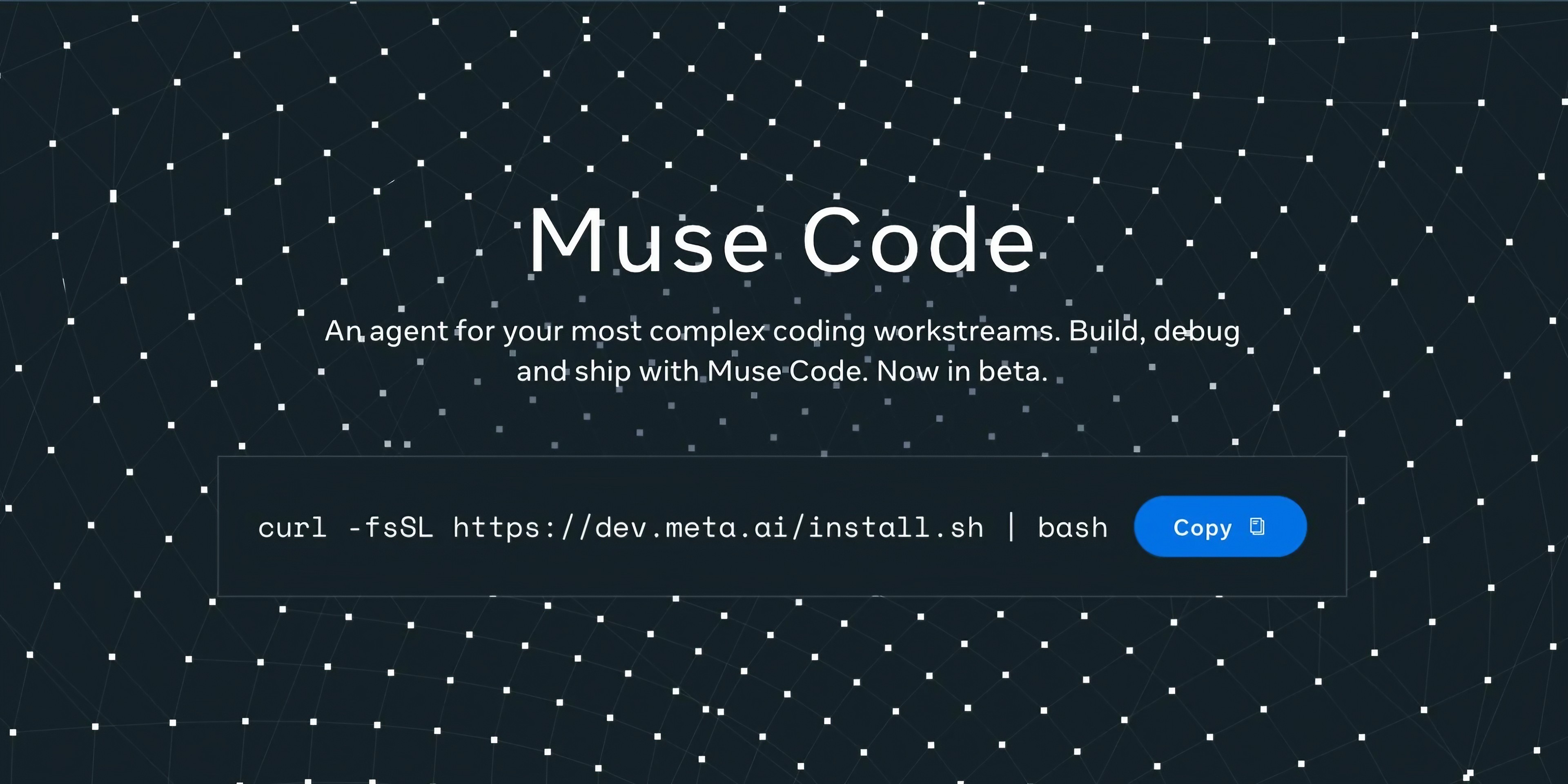
Muse Spark 1.3 is not positioned simply as another consumer chatbot. Meta makes the model available through Muse Code and the Meta Model API. Muse Code is aimed at software-development workflows, while the Model API allows developers to build applications and services using Meta's model. This means most people will probably encounter Muse Spark 1.3 indirectly. A developer may use it inside a coding environment. A company could potentially build an AI agent around the model. Another application could use the model as part of a larger workflow. That is different from opening a chatbot and having a conversation with an AI. The model is essentially a building block. Developers can put that building block inside products that give it tools, memory, permissions and a user interface. That is also why it is important not to confuse Muse Spark 1.3 with Meta's newly launched Muse personal AI agent.
Muse Spark 1.3 vs Meta Muse: What's the Difference?
Meta's Muse is a personal AI agent designed to perform tasks on behalf of users.
The names are similar, but they refer to different things. **Muse Spark 1.3 is an AI model.** **Muse is Meta's personal AI agent.** Think of Muse Spark 1.3 as the intelligence that can help power an AI application. Muse is the product that puts AI into a system designed to perform tasks for users. Meta launched Muse as a personal AI agent on September 8, 2026. It is designed to perform tasks such as sending emails, planning trips, shopping and interacting with other services. Muse can therefore be thought of as the user-facing experience, while Muse Spark represents the underlying model family. There can be other models and technologies involved in an AI agent as well. The model is only one part of the complete system. This distinction is important because headlines can easily make it sound as though Muse Spark 1.3 itself is directly booking flights or sending emails. That is not the right way to understand it. Muse Spark 1.3 is the model. Muse is the AI agent that can use AI models and tools to perform tasks.
Meta's Muse is a personal AI agent designed to perform tasks on behalf of users.
The importance of Muse Spark 1.3 is not simply that Meta has released a newer AI model. The bigger story is the direction of AI. For years, AI assistants were mainly designed around questions and answers. Now companies are trying to build systems that can understand a goal and work through the steps needed to complete it. That requires models that can maintain context, use tools, handle unexpected information and know when to ask a person for help. Muse Spark 1.3 is clearly designed around those requirements. If models continue getting better at these tasks, AI assistants could become less like search boxes and more like digital workers. A person could potentially give an AI a goal, review its plan and allow it to complete approved parts of the work. But there is an important limitation. Better reasoning does not automatically mean perfect reliability. An AI can still misunderstand a request, use the wrong information or make an incorrect decision. That is why model capability and human oversight need to develop together.
Is Muse Spark 1.3 Safe?
Safety becomes more important as AI models gain the ability to work with tools and complete longer tasks. Meta says Muse Spark 1.3 includes improvements in areas such as adversarial robustness and handling complex agentic interactions. The model is also designed to ask for clarification and involve the user when it encounters situations where additional information is needed. But no AI model should be treated as completely reliable. The risk becomes even more important when a model is connected to systems that can change real-world information or perform actions. Meta's newly launched Muse agent, for example, can interact with services such as email, shopping and payments. Reuters reported that Meta had delayed Muse's earlier launch while working on security and reliability concerns. For users, the practical lesson is straightforward. The more control an AI system receives, the more important permissions, confirmation steps, monitoring and security become.
The AnantaGo Take: Muse Spark Is More Than a New Model Number
Muse Spark 1.3 is easy to misunderstand if you only look at the name. It is not simply “another Meta chatbot.” It is an AI model designed for a world where AI systems increasingly need to work through tasks instead of only answering questions. That is why coding and agentic performance matter so much. The interesting part is the combination: a stronger model, tools around the model and products such as Muse that can turn those capabilities into something ordinary users can actually use. But capability should not be confused with reliability. An AI agent that can perform a task is useful. An AI agent that can perform the task correctly, explain what it is doing, respect permissions and stop when something looks wrong is much more useful. That is the standard Meta will ultimately have to meet. **Muse Spark 1.3 shows where Meta wants AI to go next: from answering questions to helping complete the work.**
Helpful answers
Frequently Asked Questions
What is Muse Spark 1.3?+
Muse Spark 1.3 is Meta's latest AI model, released on September 2, 2026. It is designed mainly for coding and agentic tasks, including longer workflows, tool use and complex instructions.
What is Muse Spark?+
Muse Spark is a family of Meta AI models designed for advanced reasoning, coding and agentic workflows. Muse Spark 1.3 is the latest version of the family.
What can Muse Spark 1.3 do?+
Muse Spark 1.3 can be used for coding and agentic workflows. It is designed to maintain context, work with tools, handle complex instructions and work through longer tasks.
What does agentic AI mean?+
Agentic AI refers to systems designed to work toward a goal through multiple steps. Instead of only answering a question, an agent can potentially use tools, maintain context and continue working until it reaches an appropriate result.
Where can I use Muse Spark 1.3?+
Meta makes Muse Spark 1.3 available through Muse Code and the Meta Model API, making it primarily relevant to developers and AI applications rather than ordinary chatbot users.
Is Muse Spark 1.3 better than other AI models?+
Meta reports strong improvements in coding and agentic tasks compared with earlier Muse Spark models, including approximately 20% fewer tool calls and 25% fewer tokens in its internal coding comparisons. However, no model is best at every task.