Google Search Europe Changes: Why Google Is Changing Search Results in the EU
Google Search is changing in Europe after pressure from EU regulators. Here is what Google Search Europe users need to know about the new search results, travel searches, businesses, and the Digital Markets Act.
Google Search is changing for people in Europe, and the difference could become noticeable when searching for hotels, flights, restaurants, and other local businesses. Google has introduced a new search-results format designed to comply with the European Union's Digital Markets Act, or DMA. The changes follow EU action over concerns that Google gave its own services more favorable treatment in Search.
For most people outside the European Union, Google Search will continue working normally. But for people searching from the EU, some familiar search features can now look different. The bigger question is not simply what Google changed. It is why Google is changing one of the world's most important search engines — and whether European users will actually get better search results.
What Is Happening to Google Search in Europe?
Google has changed parts of its European Search experience to comply with EU competition rules.
Google has rolled out significant changes to its Search results in Europe as it responds to the European Union's Digital Markets Act. The changes affect how Google presents its own services compared with competing services, particularly for searches involving hotels, airlines, restaurants, and other commercial categories.
The European Commission previously found Google in breach of the DMA over what it described as self-preferencing — giving Google's own services more prominent treatment than comparable third-party services. In July 2026, the Commission fined Google €460 million over the Search-related violation.
Google has now changed the way some results are displayed to comply with those requirements. The company says the changes could make Search less useful. European regulators, on the other hand, say the rules are designed to create fairer competition.
What Will Google Search Europe Look Like?
Travel and local-service searches are among the areas affected by Google's European Search changes.
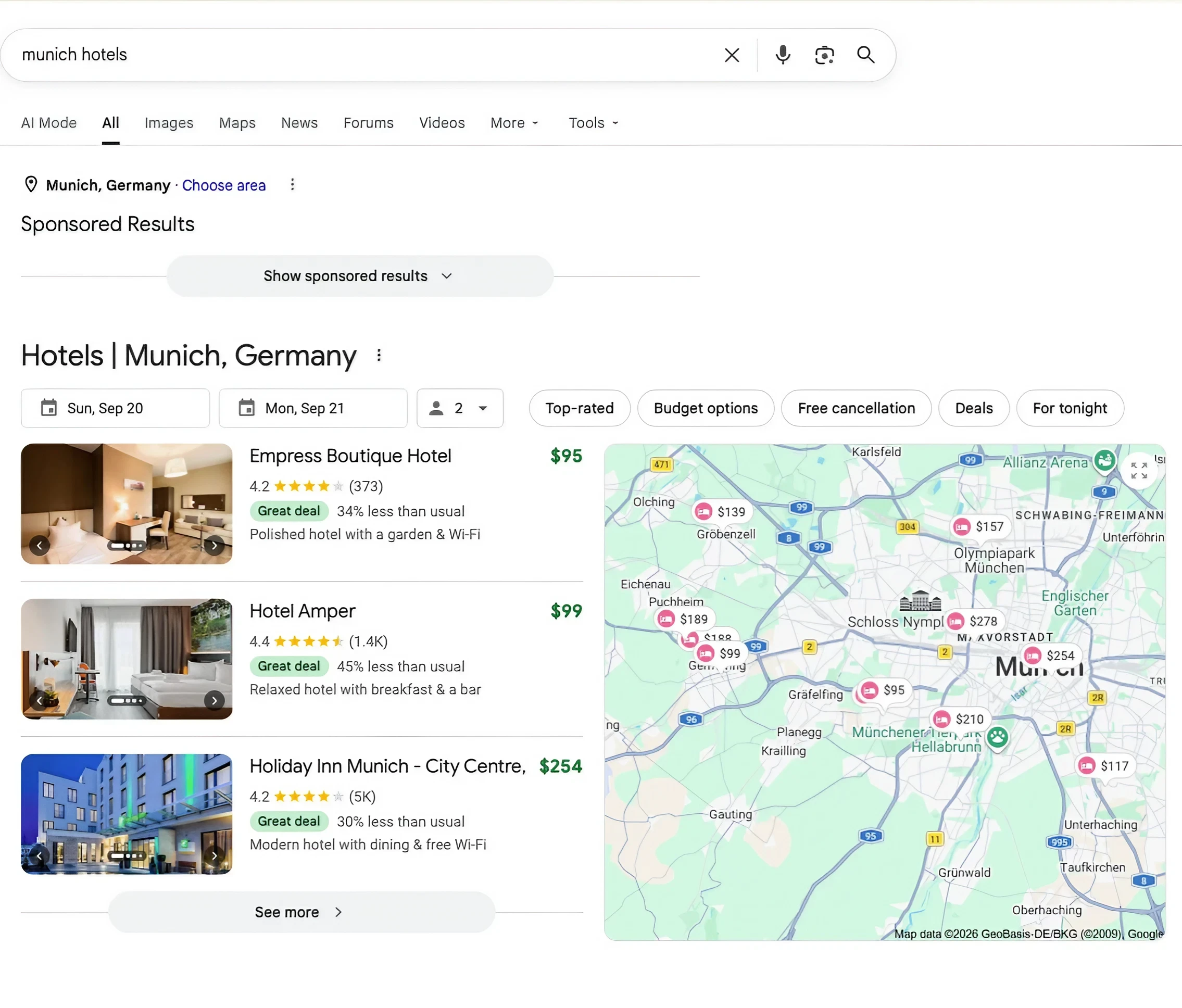
The biggest visible changes concern searches where Google provides its own services alongside competing websites and comparison platforms. For example, searches involving hotels, airlines, restaurants, and other travel-related services can now give more prominence to vertical search services, including comparison and booking platforms.
Google says the new format can place one specialized search service prominently at the top of the page, followed by two additional services with less information. Traditional business-result displays can also contain less information than before. Google has said that some familiar features, including useful details such as real-time pricing in certain result formats, may be reduced or removed.
For users, this could mean that a search that previously gave a direct answer may now require another click to find the same information.
Why Is the EU Forcing Google to Change Search?
The European Union says the goal is to improve competition rather than simply change the design of Google Search. The Digital Markets Act places special obligations on very large technology platforms known as gatekeepers. Alphabet, Google's parent company, is designated as a gatekeeper under the DMA, and Google Search is one of the services covered by the rules.
One important issue is how Google ranks its own services compared with competing services.
The European Commission says Google cannot give its own services more favorable ranking treatment than similar third-party services.
Its July decision specifically found problems involving services such as shopping, hotels, transport, and sports results. The EU's argument is that companies competing with Google should have a fair opportunity to reach users through Search.
Why Google Says Search Quality Could Get Worse
Google strongly disagrees with the idea that these changes will improve Search. The company says the new European format could make search results less useful and increase costs for European businesses. Google has described the changes as the largest reduction in Search quality in its 29-year history.
Google's argument is straightforward. If information that was previously displayed directly is reduced or removed, users may need to visit additional websites to find what they want. That could make simple searches more complicated. But there is another side to the argument. If Google's own services receive less preferential treatment, competing companies may have a better chance of appearing prominently.
For users, the debate therefore comes down to a difficult balance: convenience versus competition.
What Does This Mean for Businesses?
European businesses that depend on Google Search could see changes in how customers discover their products and services. This is particularly important for hotels, airlines, restaurants, travel companies, and other businesses that rely heavily on search traffic.
Google says previous changes made in response to the DMA resulted in a 30% decline in free, direct booking traffic to European businesses. The company expects the latest changes to create additional pressure on some businesses.
If comparison and booking platforms receive greater visibility, businesses may have to rely more heavily on those intermediaries to reach customers. That can create a trade-off: a business may still receive customers from Google, but it may have less direct contact with those customers.
Business
Possible effect
Hotels
More reliance on booking platforms
Airlines
Greater competition from travel services
Restaurants
Restaurants
Travel companies
Potential changes in direct Google traffic
Will Google Search Change Everywhere?
No. These particular changes are connected to Google's European regulatory requirements. Google has said users outside the European Union will not be affected by this specific Search redesign. That means the same search could potentially produce a different experience depending on where the user is located.
Someone searching Google in India or the United States may see a different layout from someone searching in Germany, France, Italy, Spain, or another EU country. This is an important development because Google Search is becoming increasingly shaped by regional regulation rather than being exactly the same product everywhere.
What Should Google Search Users Expect?
For everyday users, the biggest difference may simply be that familiar information appears in a different order. You may see more comparison websites when searching for travel-related services. Some business information may also appear differently, and certain price or booking details may no longer be presented in exactly the same way as before.
At first, these differences could feel confusing. However, there is also a possible benefit. Users could discover competing services that they might not normally see when Google's own products receive more prominent placement. The real test will be whether people can still find useful information quickly.
More comparison services may appear in some searches
Travel-related searches may look different
Some business information may be displayed differently
Users may see more competing services
Some searches may require additional clicks
AnantaGo Analysis: Is Google Search Europe Actually Better?
The interesting part of the Google Search Europe story is that both sides have a reasonable argument. From Google's perspective, Search works because it combines information from different sources and presents it in a convenient way. Removing some of those features can make searches feel less direct.
From the EU's perspective, convenience should not come at the expense of competition. If Google's own services receive an advantage simply because Google controls Search, competing companies can struggle to reach customers. For users, the result could go either way. If the new system creates more genuine choices, European users could benefit. If it simply adds more clicks without improving the quality of information, Search could become more frustrating.
Our view at AnantaGo is that the change should be judged by the actual user experience rather than by Google's warnings or the EU's promises alone. If users gain meaningful alternatives without losing useful information, the changes could ultimately be positive. If users simply have to click through more websites to find the same answer, the experience could become worse.
The Bottom Line
Google Search Europe is entering a new phase as European regulators push one of the world's biggest search engines to change how it treats competing services. The changes are part of a much bigger battle over competition, consumer choice, and the power of large technology platforms.
For European users, the immediate effect is that some searches — particularly travel and local-service searches — may look different. For businesses, the changes could affect how customers discover and book their services. For Google, Europe has become an important test of how much its Search product can change under regulatory pressure. The biggest question now is simple: will Google Search Europe become fairer without becoming harder to use?
Helpful answers
Frequently Asked Questions
What is Google Search Europe?+
Google Search Europe refers to Google's Search experience for users in European countries. Google is changing parts of this experience to comply with European Union competition regulations, including the Digital Markets Act.
Why is Google changing Search in Europe?+
Google is making changes in response to EU regulatory requirements concerning competition and how Google's own services are presented compared with competing services.
Will Google Search change in India?+
The latest changes discussed in this article are specifically related to Google's European regulatory requirements. Google says users outside the EU will not be affected by this specific Search redesign.
Will Google Search become worse in Europe?+
That is still a matter of debate. Google says the changes could reduce Search quality, while EU regulators argue that the changes are necessary to create fairer competition.
Which Google searches are most affected?+
Travel and local-service searches are particularly important. Hotels, airlines, restaurants, and similar searches can involve comparison and booking platforms that compete with Google's own services.
What is the Digital Markets Act?+
The Digital Markets Act is a European Union law designed to regulate very large digital platforms and promote fairer competition in digital markets.
Will businesses lose Google traffic?+
Some businesses could see changes in how they receive traffic from Google Search. The effect will vary by industry and search type, particularly for companies that depend heavily on direct search visibility.