POCO X8 Pro vs X8 Power: Is the 10,000mAh Battery Worth Paying More?
The POCO X8 Pro and POCO X8 Power take very different approaches to the same mid-range smartphone market. The X8 Pro focuses on performance, while the X8 Power packs a huge 10,000mAh battery. Here is what really separates them and which one makes more sense for different buyers.
POCO has just made its X8 lineup more interesting in India The company already had the POCO X8 Pro, a phone aimed at people who want strong performance without moving into flagship pricing. Now the POCO X8 Power has arrived with something that immediately grabs attention: a massive 10,000mAh battery.
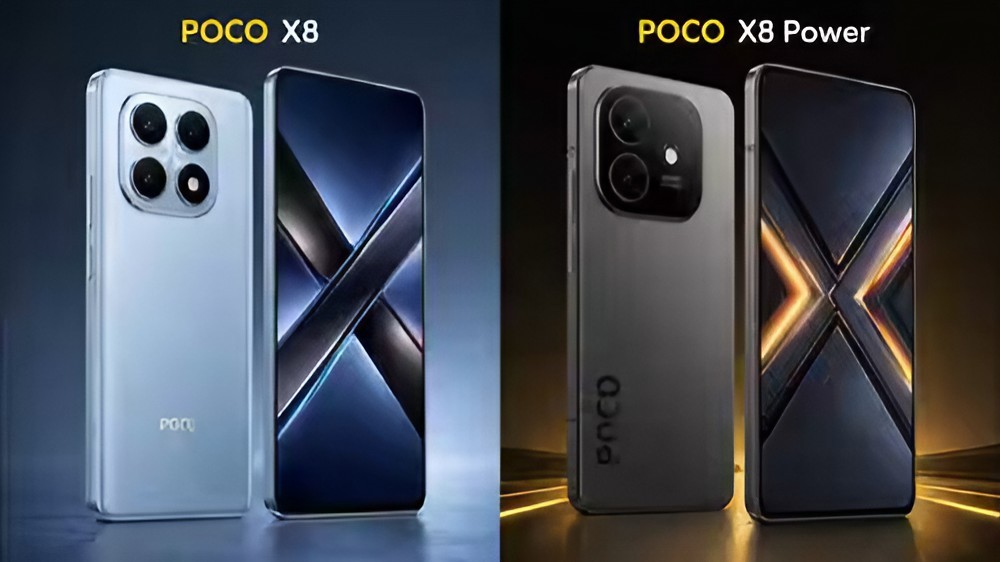
That creates an interesting choice. The X8 Pro is the more performance-focused phone, with a MediaTek Dimensity 8500-Ultra chipset, a 6.59-inch 1.5K 120Hz AMOLED display and a 6,500mAh battery. The X8 Power goes in another direction, pairing a Snapdragon 6 Gen 5 processor with a much larger 10,000mAh battery and a bigger 6.83-inch 1.5K 120Hz display.
So which one should you buy? At first glance, the X8 Power's battery makes it look like the obvious winner. But battery capacity is only one part of a smartphone. The more interesting comparison is performance versus endurance. Here is what actually separates the POCO X8 Pro and POCO X8 Power.
POCO X8 Pro vs X8 Power: Two Very Different Priorities
The easiest way to understand these two phones is to think about what each one is designed to prioritize. The POCO X8 Pro is built around performance. Its Dimensity 8500-Ultra chipset, LPDDR5X RAM and fast storage make it the more obvious choice for users who care about demanding apps, gaming and sustained everyday performance.
The X8 Power is different. Its biggest selling point is endurance. The 10,000mAh battery is substantially larger than the 6,500mAh battery inside the X8 Pro. It also supports 100W fast charging, so POCO is not simply making the battery larger and accepting slow charging in return.
This makes the comparison more interesting than a normal Pro-versus-standard phone battle. One phone is asking: “How much performance can I give you?” The other is asking: “How long can I keep you away from a charger?”
POCO X8 Pro vs X8 Power: Specifications Compared
Feature
POCO X8 Pro
POCO X8 Power
Processor
MediaTek Dimensity 8500-Ultra
Snapdragon 6 Gen 5
Display
6.59-inch 1.5K AMOLED
6.83-inch 1.5K AMOLED
Refresh rate
120Hz
120Hz
Battery
6,500mAh
10,000mAh
Charging
100W
100W
Rear camera
50MP + 8MP
50MP + 8MP
Front camera
20MP
32MP
Software
Android 16 / HyperOS 3
Android 16 / HyperOS 3
Main focus
Performance
Battery life
The Biggest Difference: 6,500mAh vs 10,000mAh
There is no way around the biggest difference between these phones. The X8 Power has a 10,000mAh battery. That is an unusually large capacity for a mainstream smartphone, and it is the feature most likely to influence a buying decision.
The X8 Pro's 6,500mAh battery is already large by normal smartphone standards. The X8 Power adds another 3,500mAh on top of it. That does not automatically mean the X8 Power will last exactly 54 percent longer. Battery life also depends on the processor, display, software, network conditions, brightness, gaming and the apps you use. But the extra capacity gives the X8 Power considerably more room to work with.
For someone who travels frequently, spends long hours away from a charger or uses their phone heavily throughout the day, that difference could be more meaningful than having a faster processor.
The X8 Pro Has the Performance Advantage
If battery capacity is the X8 Power's biggest weapon, performance is where the X8 Pro fights back. The X8 Pro uses MediaTek's Dimensity 8500-Ultra, paired with LPDDR5X memory. Current specifications list up to 12GB of RAM, while the phone also uses fast UFS 4.1 storage.
That hardware gives the X8 Pro a much stronger performance-oriented identity. This matters if you regularly play demanding games, edit videos, switch between several heavy applications or simply want a phone with more performance headroom.
The X8 Power uses Qualcomm's Snapdragon 6 Gen 5 instead. That does not make it a slow phone, but the two models are clearly positioned differently. In other words, buying the X8 Power mainly for its enormous battery means accepting a different performance balance.
Which Phone Has the Better Display?
Both phones take displays seriously, but they have different sizes. The X8 Pro has a 6.59-inch 1.5K AMOLED display with a 120Hz refresh rate. The X8 Power increases the screen size to 6.83 inches while retaining a 1.5K resolution and 120Hz refresh rate.
That makes the X8 Power more interesting for people who consume a lot of video, browse for long periods or simply prefer a larger screen. The X8 Pro's smaller display, however, can be an advantage for people who prefer a phone that feels less oversized.
Neither approach is universally better. If you want a larger screen for entertainment, the X8 Power makes more sense. If you prefer a slightly more compact device and care more about performance, the X8 Pro is the more balanced choice.
What About the Cameras?
Neither phone is being positioned primarily as a camera flagship. The X8 Pro has a 50MP main camera paired with an 8MP ultrawide camera, along with a 20MP front camera. Current specifications for the X8 Power list a similar 50MP + 8MP rear setup but a higher-resolution 32MP front camera.
That means buyers should not choose between these two phones purely on megapixel numbers. Camera quality depends on much more than resolution, including the sensor, image processing, stabilization and software. For most buyers, the more important difference between these phones remains the processor, battery and size.
If photography is your number-one priority, there are other smartphones designed more specifically around cameras that deserve consideration.
POCO X8 Pro vs X8 Power Price in India
The pricing makes the comparison even more interesting. The POCO X8 Power launched in India at ₹35,999, with sales scheduled to begin on September 11, 2026. The phone is offered with up to 8GB RAM and 256GB storage in the configurations currently reported.
The POCO X8 Pro originally launched in India from ₹32,999 for 8GB RAM and 256GB storage, while the 12GB + 256GB model launched at ₹35,999. However, current retail prices can be higher than the original launch prices, so buyers should check the live price before purchasing.
That distinction matters. The X8 Power is not simply a cheaper alternative to the X8 Pro. It is a different proposition. You are paying for a huge battery and large display rather than simply buying the fastest phone available at the price.
Who Should Buy the POCO X8 Pro?
You care about gaming and performance.
You use demanding apps regularly.
You prefer a slightly smaller display.
You want the stronger chipset.
You want a powerful phone rather than an endurance-focused phone.
You are comfortable charging your phone regularly.
You want more performance headroom for future apps and games.
Who Should Buy the POCO X8 Power?
Battery life is your number-one priority.
You travel frequently.
You spend long periods away from a charger.
You watch a lot of videos on your phone.
You prefer a large 6.83-inch display.
You want a huge battery without giving up 100W charging.
You would rather have extra endurance than maximum processing performance.
Is the 10,000mAh Battery Actually Worth It?
This is the question that matters most. A 10,000mAh battery sounds spectacular on a specification sheet, but it is only worth paying extra for if you will actually use that capacity. For a heavy phone user, the answer could be yes.
Imagine someone who spends hours watching videos, using navigation, playing games and working from their phone. Carrying a huge battery can reduce the need to search for a charger during the day. For a lighter user who mostly uses WhatsApp, Instagram, calls and occasional YouTube, the additional battery capacity may not be nearly as valuable.
That is why we would not call the X8 Power automatically “better.” It is better at one particular thing: maximizing battery capacity. The X8 Pro is better suited to someone who wants a more performance-focused smartphone. That distinction is more useful than simply declaring one phone the winner.
AnantaGo Verdict: Which POCO X8 Should You Choose?
The POCO X8 Pro and X8 Power are actually a smart pairing for POCO. Instead of making two phones that compete with each other in exactly the same way, the company has given buyers two different reasons to choose. The X8 Pro is the phone we would look at first if performance is the priority. Its Dimensity 8500-Ultra, fast memory and 120Hz AMOLED display give it a more performance-oriented identity.
The X8 Power makes more sense if battery anxiety is your biggest problem. Its 10,000mAh battery is the headline feature, and the combination of 100W charging and a large 120Hz AMOLED display makes it more than just a battery phone. So our recommendation is simple:
Choose the X8 Pro if you want performance first. Choose the X8 Power if you want battery life first. And if you are asking whether the 10,000mAh battery alone makes the X8 Power worth buying, the answer is: **only if you actually need that much endurance.** For everyone else, the X8 Pro may be the more balanced choice.
The Bottom Line
The POCO X8 Pro vs X8 Power comparison is not really about which phone has the bigger number. It is about what you value more. The X8 Pro gives you a stronger performance-focused package with the Dimensity 8500-Ultra, 6,500mAh battery, 100W charging and a 6.59-inch 120Hz AMOLED display.
The X8 Power takes a more unusual approach. Its Snapdragon 6 Gen 5 processor is paired with a massive 10,000mAh battery and a larger 6.83-inch 120Hz AMOLED screen. That makes the X8 Power one of the more interesting phones to watch in the current mid-range market.
But the bigger battery should not automatically win the comparison. For gamers and performance-focused users, the X8 Pro remains the more compelling option. For travelers, heavy users and anyone who hates charging their phone, the X8 Power could be the better investment.
The smartest choice is therefore not “Pro versus Power.” It is deciding whether your priority is **performance or endurance**.
Helpful answers
Frequently Asked Questions
POCO X8 Pro vs X8 Power: which is better?+
The POCO X8 Pro is the better choice for performance-focused users, while the X8 Power is better for users who prioritize battery life. The X8 Power has a 10,000mAh battery, while the X8 Pro has a 6,500mAh battery.
How big is the POCO X8 Power battery?+
The POCO X8 Power has a 10,000mAh battery and supports 100W fast charging.
Does the POCO X8 Pro have a 10,000mAh battery?+
No. The POCO X8 Pro has a 6,500mAh battery with 100W fast charging.
Which has the better processor, POCO X8 Pro or X8 Power?+
The POCO X8 Pro has the more performance-focused chipset, the MediaTek Dimensity 8500-Ultra. The X8 Power uses Qualcomm's Snapdragon 6 Gen 5 and prioritizes battery endurance instead.
What is the POCO X8 Power price in India?+
The POCO X8 Power launched in India at ₹35,999. Current offers and effective prices can vary by retailer and promotion.
When does the POCO X8 Power go on sale in India?+
The POCO X8 Power is scheduled to go on sale in India from September 11, 2026.
Should I buy the POCO X8 Power for its 10,000mAh battery?+
If you are a heavy user, travel frequently or regularly run out of battery, the huge capacity can be a major advantage. If you are a lighter user, the X8 Pro's stronger performance may provide better overall value.
#POCO X8 Pro#POCO X8 Power#POCO X8 Pro vs X8 Power#POCO phones#Xiaomi#smartphones#10000mAh battery#Android phones#India smartphones#Tech