Apple’s first foldable iPhone is here. We explain the iPhone 18 Duo’s design, 7.6-inch display, price, India release date, cameras and why Apple’s foldable approach could change the iPhone.

For years, the foldable iPhone has been one of Apple's biggest unanswered questions. Now we finally have an answer.
Apple has officially introduced the iPhone Duo, its first foldable iPhone. The company is entering a market that Samsung and other phone makers have already been building for years. But that is also what makes the Duo interesting. Apple isn't the first company to make a phone that folds. The real question is whether Apple has found a reason for people to actually want one.
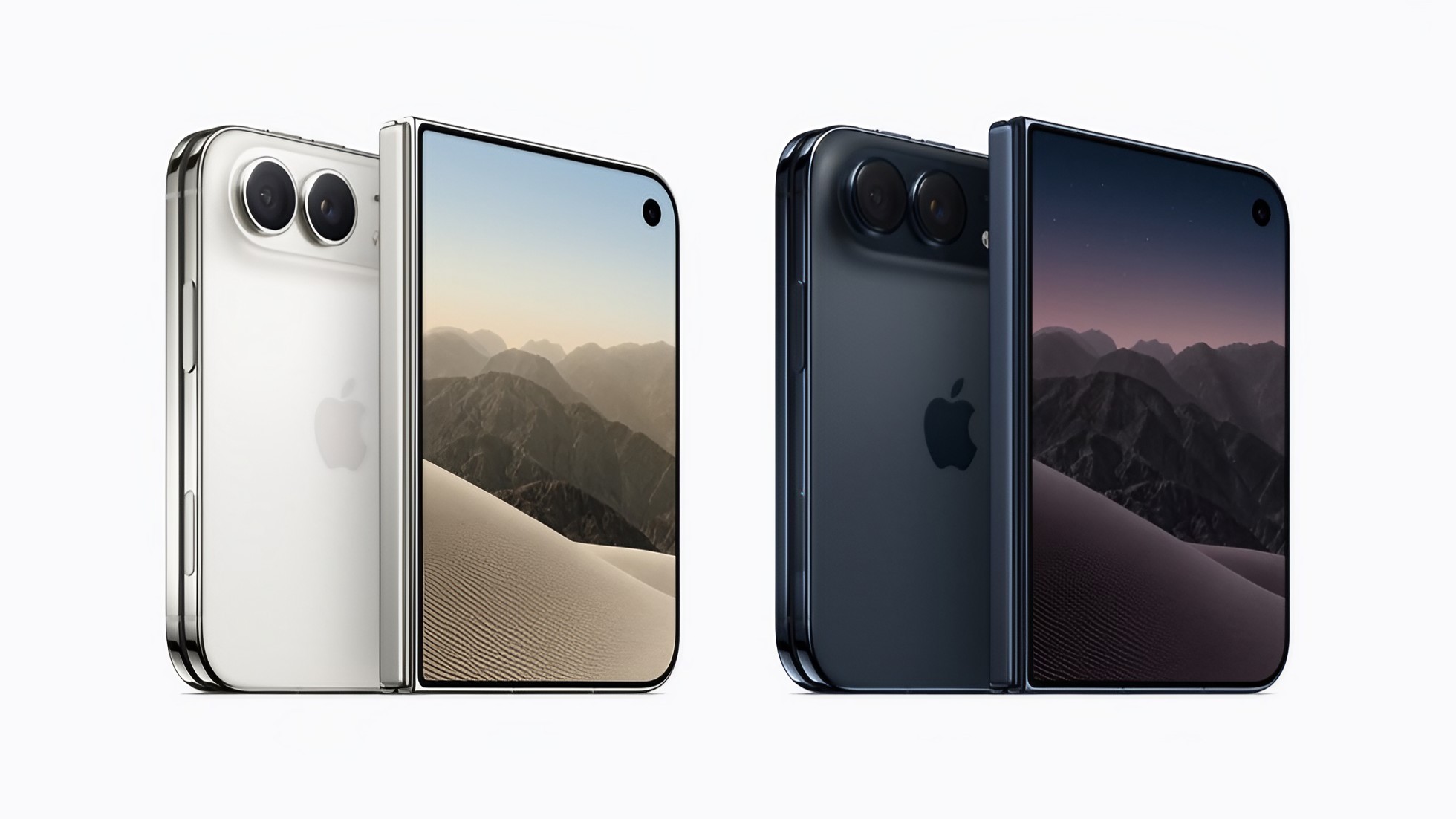
The iPhone Duo opens to a 7.6-inch inner display and uses a 5.4-inch screen when closed. Apple says it is designed around a new version of iOS 27, with features that make use of the larger display for multitasking, gaming, video and everyday work. And then there is the price: **$1,999 in the United States** for the 256GB model. So, what are you really getting for that money, and does a foldable iPhone finally make sense?
The easiest way to understand the iPhone Duo is to forget the word "foldable" for a moment.
Think about what normally happens when you use a phone. It is great when you need something small and convenient, but the screen can start feeling cramped when you want to read a long document, compare information, edit something or use multiple apps. The Duo tries to solve that problem.
When it is closed, you have a 5.4-inch outer display. Open it, and you get a 7.6-inch inner display. Apple says the inner screen is 50 percent larger than the display on the iPhone 18 Pro Max. The bigger screen is really the reason this phone exists. That sounds obvious, but it is important. Apple isn't simply selling a phone that happens to fold. It is trying to make one device behave like a phone when you need convenience and something closer to a small tablet when you need more room.

Foldable phones are usually discussed through hardware. People talk about the hinge, the thickness, the display crease and whether the phone can survive years of opening and closing.
Those things matter. Apple says the Duo uses a precision hinge, titanium construction and several layers of protection around the folding display. It also has an IP68 rating for water and dust resistance.
But none of those features will decide whether people love the Duo. The real test is what happens after the novelty disappears. If opening the phone genuinely makes everyday tasks easier, the foldable design has a purpose. If people only open it to watch a video or show someone that their phone folds, the extra hardware becomes much harder to justify.
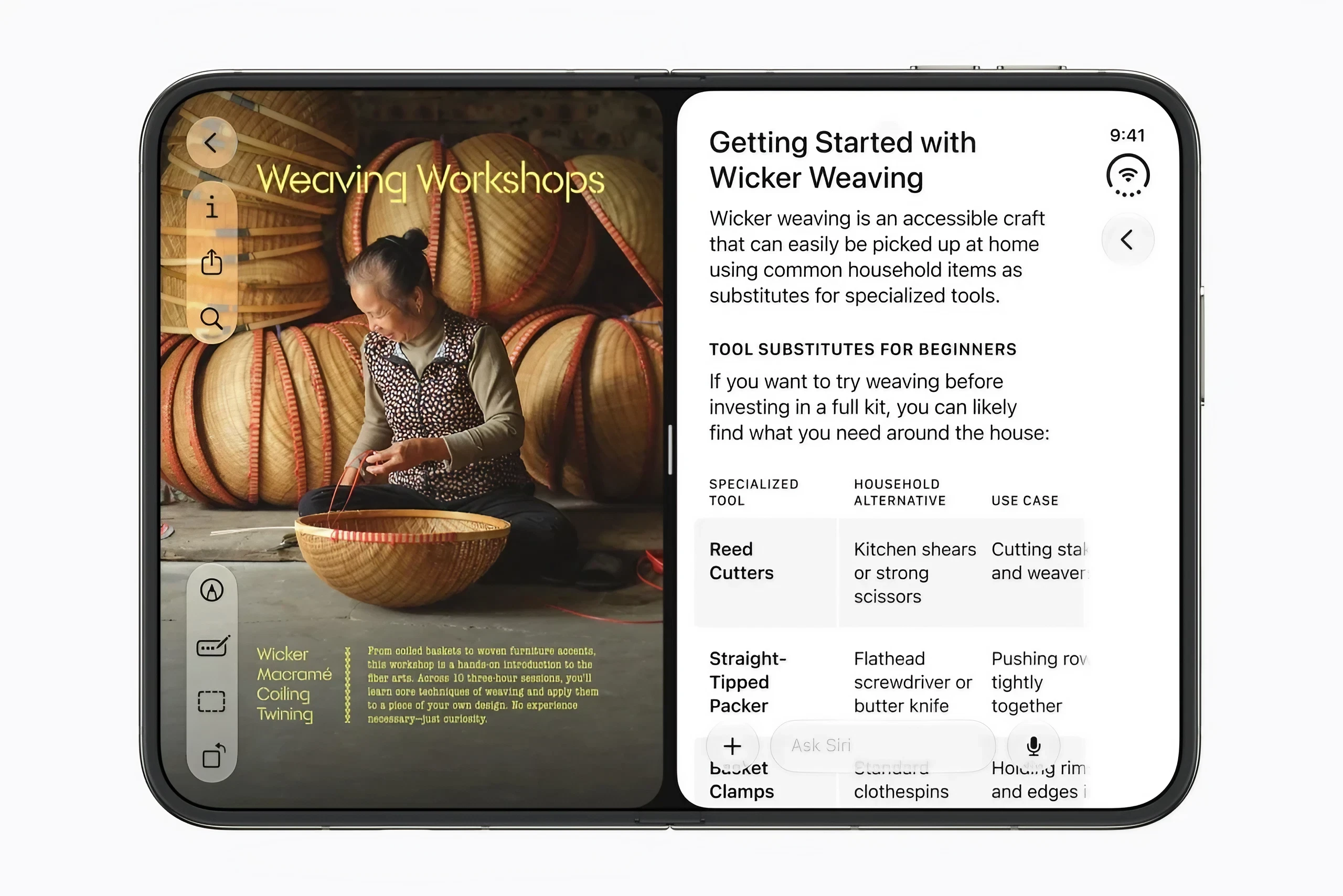
This is where Apple's software becomes just as important as the hardware. Apple says iPhone Duo supports Split View, allowing two apps to appear side by side for the first time on iPhone. Users can also open two windows of the same app, such as Safari. That could be useful in situations that sound surprisingly ordinary.
You could browse a product on one side while comparing another page on the other. You could keep a document open while taking notes. You could watch something while keeping another app available. These aren't revolutionary tasks. You can already do many of them on a tablet or computer. The difference is that the larger screen is attached to the phone you already carry.
That could be the Duo's strongest argument. Apple also says apps such as Netflix, Zoom and Slack have been adapted for the folding design, which suggests that the usefulness of the inner screen will depend partly on how quickly developers take advantage of it.

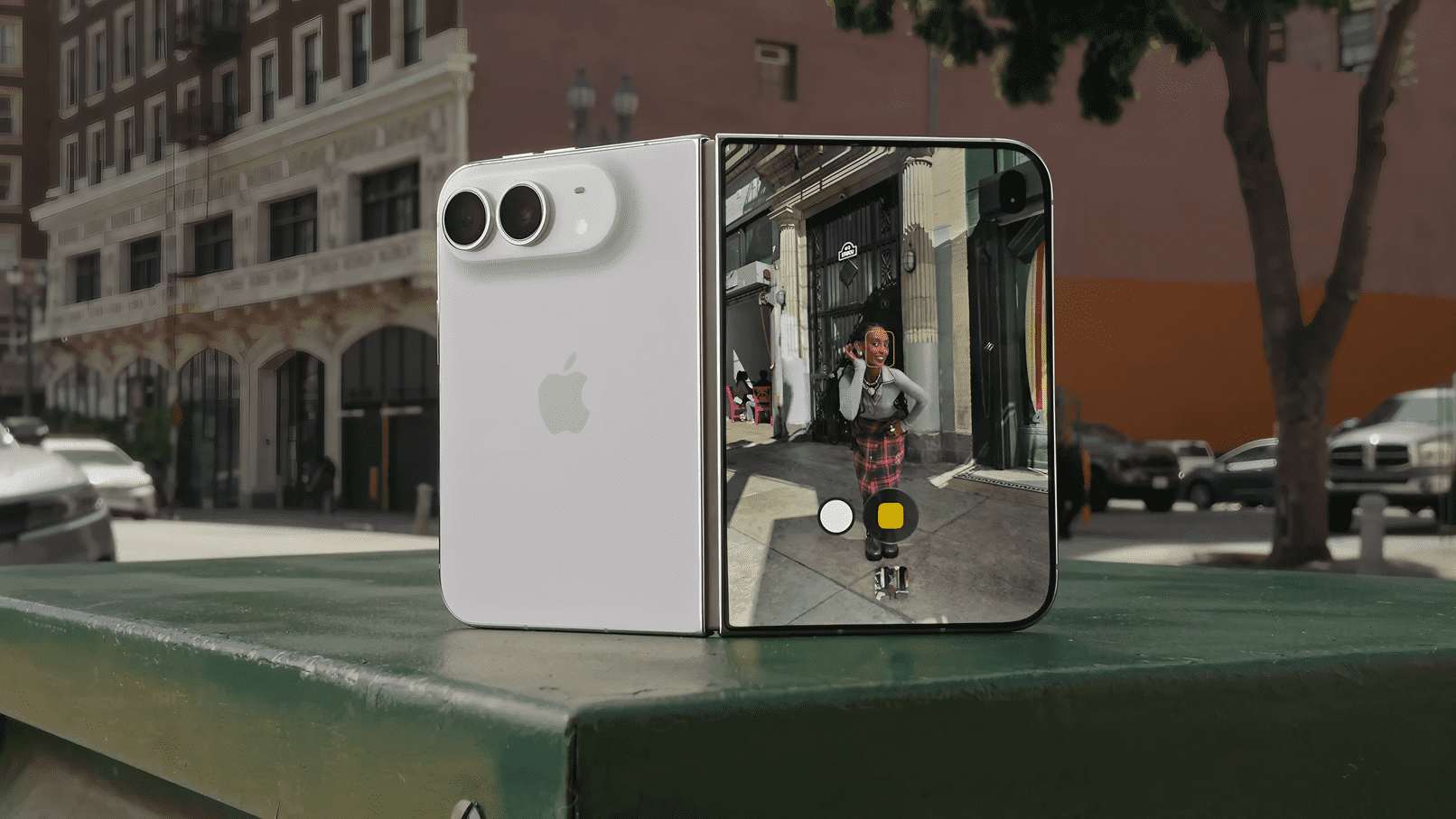
The camera system is another place where the folding design actually changes what the phone can do. The Duo has a 48MP Fusion Main camera and a 48MP Fusion Ultra Wide camera. But the more interesting part isn't the megapixel count. Apple has designed the two displays to work with the cameras.
For example, you can use the higher-resolution rear cameras for a selfie while looking at a live preview on the outer screen. The phone can also be propped up for hands-free photos or video calls. Apple calls one of these features Duo Preview.
This is a good example of a foldable feature that has a practical purpose. You aren't using the folding screen simply because it looks futuristic. The shape of the phone changes how you can use the camera.
The $1,999 starting price is probably going to be the first thing many people notice.
That is a lot of money for a smartphone, even before moving to the higher storage versions.
Apple offers the Duo with 256GB, 512GB, 1TB and 2TB of storage. But the storage isn't really the main story here.
The bigger question is what the Duo could replace. If you already own a large-screen tablet and a regular iPhone, the Duo may look unnecessary. You would be paying a huge premium to combine two types of devices into one. But if you want one device that can handle normal phone tasks and give you a larger workspace when you need it, the price becomes easier to understand.
That doesn't automatically make it good value. The Duo only makes sense if you will actually use the larger screen. For someone who spends most of the day messaging, scrolling through social media and taking occasional photos, a conventional iPhone could be the smarter purchase.
For Indian buyers, the release date is already confirmed. Apple says customers in India will be able to pre-order the iPhone Duo from October 16, 2026, with availability beginning October 23, 2026. Apple's U.S. starting price is $1,999, but Indian buyers should not simply convert that amount into rupees and assume it will be the final local price. Taxes, duties and regional pricing can affect the amount customers actually pay.
Apple's India website lists the Duo as becoming available from October 23. So if you're searching for the iPhone Duo India price, the safest approach is to check Apple's Indian store when local pricing is published rather than relying on unofficial estimates.

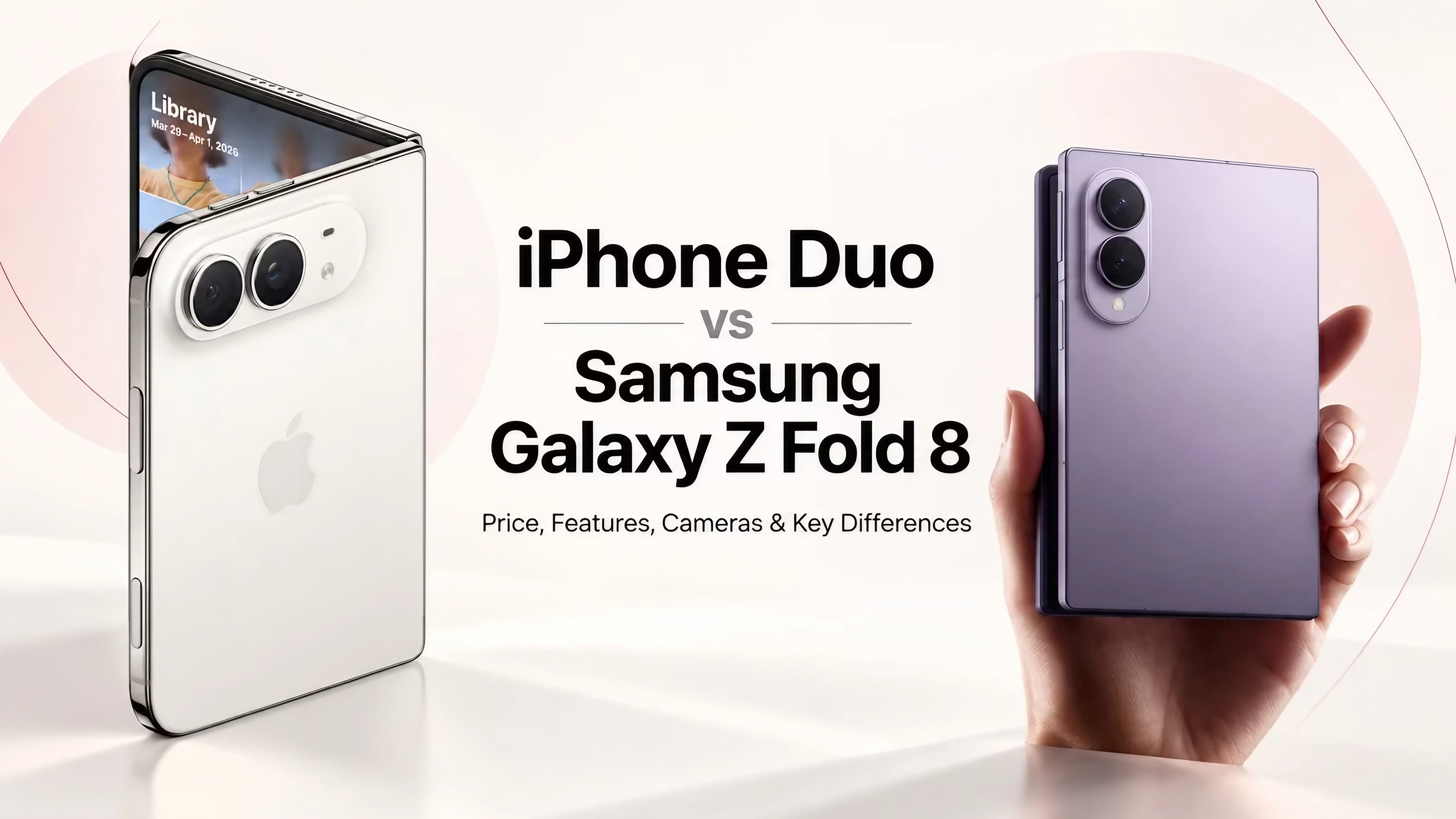
Apple is entering a market that Samsung already knows very well. Samsung has spent years developing the Galaxy Z Fold line. That means Apple isn't teaching consumers what a foldable phone is. It is trying to convince existing iPhone users that they should want one.
That gives Apple an unusual challenge.
Apple is late to foldables, but it doesn't need to be first. It needs to make the experience feel polished enough that people who previously ignored foldable phones start considering one.
The company has an advantage here because it controls the iPhone's hardware, software and services together.
But Samsung has the advantage of experience. That makes the next few years particularly interesting. The competition won't simply be about which company has the thinnest phone or the best hinge. It will be about which company makes the larger screen genuinely useful.
Apple's biggest strength with the Duo is that the company controls both sides of the experience.
The hardware can fold, while iOS 27 (Read more about IOS27) can change its layout depending on how the phone is being used. That gives Apple more control than simply putting a flexible screen into an existing smartphone design.
The Duo also has some genuinely useful ideas, especially the ability to use two apps side by side and the camera features made possible by the two displays. But there are still questions. The biggest one is simple: how often will people actually open it?
A feature can be technically impressive and still not become part of someone's daily routine.
The Duo will need to prove that the larger screen is something people reach for naturally — not something they open only when they want to show someone their new phone.
The iPhone Duo isn't automatically better than a normal iPhone just because it folds.
If you mainly use your phone for messages, social media, calls and occasional photos, a conventional iPhone is probably the simpler choice. But if you constantly find yourself wishing your phone had more room for reading, watching, comparing, editing or multitasking, the Duo solves a problem that a normal iPhone cannot.
That's what makes Apple's first foldable interesting. The important question isn't whether Apple can make a phone that folds. We already know it can. The real question is whether people will open it often enough to wonder how they ever lived without it. If the answer is yes, the iPhone Duo could do something much bigger than enter the foldable-phone market. It could make foldable phones feel normal.
Keep Reading

Tech
Google Search is changing in Europe after pressure from EU regulators. Here is what Google Search Europe users need to know about the new search results, travel searches, businesses, and the Digital Markets Act.

Tech
When is iOS 27 coming out? Apple has confirmed that iOS 27 is arriving this fall, but the final public release date has not yet been announced. Here’s what we know about the iOS 27 release date, the September 9 Apple event, beta testing and what iPhone users should expect.

Tech
Huawei has launched the Mate XT2, a new tri-fold smartphone priced from 19,999 yuan. With a large 10.2-inch display, a new Kirin 9050 Pro chip and improved folding design, Huawei is pushing foldable phones into an even more ambitious direction.

Tech
Lenovo has unveiled a laptop concept that can grow from a compact 14-inch screen into a much larger 17-inch display. Here is how Project Swan works, why Lenovo built it, and whether rollable laptops could become the next big change in portable computing.

Tech
The POCO X8 Pro and POCO X8 Power take very different approaches to the same mid-range smartphone market. The X8 Pro focuses on performance, while the X8 Power packs a huge 10,000mAh battery. Here is what really separates them and which one makes more sense for different buyers.

Tech
IFA Berlin 2026 is showcasing a new generation of consumer technology, from rollable laptops and bezel-less smartphones to smarter robots, AI-powered homes and next-generation audio devices. Here are the biggest technology developments from this year's event and what they could mean for everyday users.